Apigenin Mitigates Neurochemical Alterations, Oxidative and Nitrergic Stress Induced in Two-Hit Neurodevelopmental Model of Schizophrenia in Rats
DOI:
https://doi.org/10.14740/jcp1Keywords:
Apigenin, Schizophrenia, Two-hit, Neurodevelopmental, Neurochemical, Oxidative stress, Nitrergic, RatsAbstract
Background: Schizophrenia is a complex neurodevelopmental disorder arising from the interaction of genetic and environmental factors across critical developmental periods. Oxidative stress and dysregulated neurotransmission are central mechanisms implicated in its pathophysiology. Apigenin, a naturally occurring flavonoid, possesses notable antioxidant and neuromodulatory properties, suggesting potential therapeutic value as a broader-spectrum alternative to conventional antipsychotic agents. This study evaluated the efficacy of apigenin in attenuating behavioral and neurobiochemical alterations induced by isolation rearing combined with chronic ketamine exposure in two-hit neurodevelopmental model of schizophrenia.
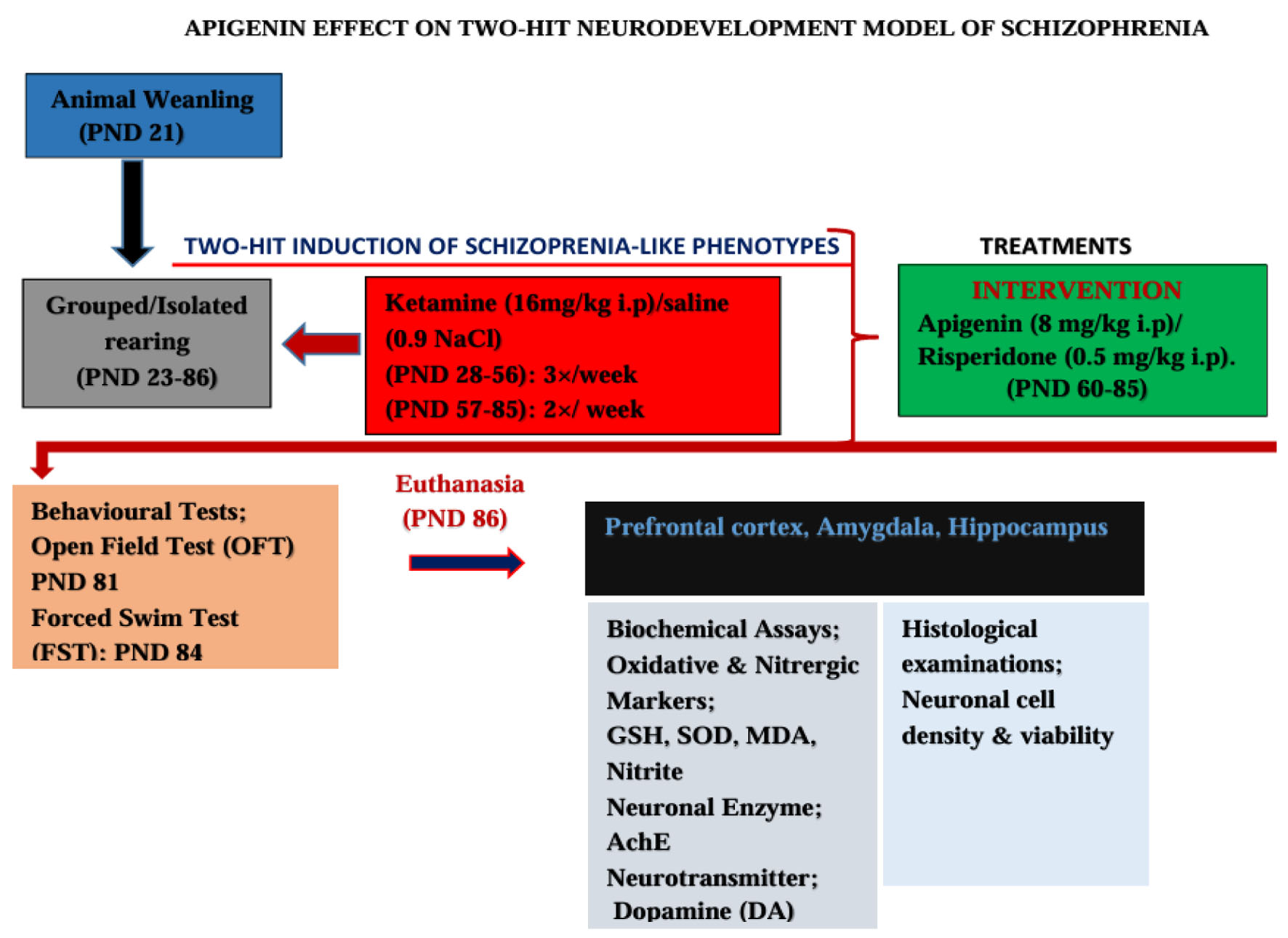
Methods: Sixty-four (N = 64) male Sprague–Dawley rats weaned on postnatal day (PND) 21 were assigned to either group housing or isolation rearing from PND 23. Animals were further subdivided into treatment groups receiving saline (0.9% NaCl) or ketamine (16 mg/kg, i.p.) from PND 28 to 85. From PND 60 to 85, selected groups received apigenin (8 mg/kg, i.p.) or risperidone (0.5 mg/kg, i.p.) as interventions. Behavioral assessments using the open field test (OFT) and forced swim test (FST) were conducted, followed by biochemical and histopathological analyses of the prefrontal cortex, hippocampus, and amygdala.
Results: Apigenin significantly reduced hyperlocomotion and immobility in behavioral tests, biochemically, reduced oxidative stress by lowering malondialdehyde and nitrite levels, enhanced antioxidant enzyme activities, normalized dopaminergic transmission, and reduced acetylcholinesterase activity. Histological findings revealed restoration of neuronal density and structural integrity across examined brain regions.
Conclusion: Apigenin demonstrated broad therapeutic potential by mitigating behavioral abnormalities, oxidative stress, and neurochemical disturbances relevant to the pathogenesis of schizophrenia.
Published
Issue
Section
License
Copyright (c) 2026 The authors

This work is licensed under a Creative Commons Attribution-NonCommercial 4.0 International License.