| Journal of Current Pharmacology, ISSN 0000-0000 online, Open Access |
| Article copyright, the authors; Journal compilation copyright, J Curr Pharmacol and Elmer Press Inc |
| Journal website https://jcp.elmerpub.com |
Original Article
Volume 1, 2026, e6

Flumazenil Reversal of Remimazolam Sedation to Facilitate Emergence and Rapid Neurologic Examination in Patients Undergoing Posterior Spinal Fusion
Nicholas Weavera, Sibelle Aurelie Yemele Kitiob, Joseph D. Tobiasb, c, d
aHeritage College of Osteopathic Medicine - Dublin Campus, Dublin, Ohio and Ohio University, Athens, OH, USA
bDepartment of Anesthesiology & Pain Medicine, Nationwide Children’s Hospital, Columbus, OH, USA
cThe Ohio State University College of Medicine, Columbus, OH, USA
dCorresponding Author: Joseph D. Tobias, Department of Anesthesiology & Pain Medicine, Nationwide Children’s Hospital, Columbus, OH 43205, USA
Manuscript submitted July 23, 2026, accepted September 19, 2026, published online October 10, 2026
Short title: Flumazenil and Remimazolam
doi: https://doi.org/10.14740/jcp6
| Abstract | ▴Top |
Background: Remimazolam is a novel, ester-metabolized benzodiazepine, which received approval by the United States Food & Drug Administration for procedural sedation in adults in 2020. Given its clinical efficacy, intraoperative use has expanded with administration as the primary agent or as an adjunct to general anesthesia in both adult and pediatric patients. Although its novel route of metabolism through tissue esterases generally results in a rapid resolution of its effects, in certain clinical scenarios, reversal may be facilitated with flumazenil.
Methods: We retrospectively reviewed our clinical experience with the use of flumazenil to reverse the effects of remimazolam and speed emergence from anesthesia to facilitate a rapid postoperative neurologic examination following posterior spinal fusion (PSF).
Results: The study cohort included 20 patients, ranging in age from 11 to 24 years. Two patients were excluded from the flumazenil-to-tracheal extubation timing analysis as they did not receive flumazenil for that clinical indication. The median flumazenil bolus dose was 0.1 mg (range 0.1–0.5 mg) with 12 patients receiving one dose, four receiving two doses, and four receiving three doses. Overall, 16 of 18 patients (88.9%) underwent tracheal extubation in less than 5 min after flumazenil administration. No clinically significant adverse events directly attributable to flumazenil were documented.
Conclusions: These preliminary findings suggest that incremental, low-dose flumazenil administration may facilitate timely emergence and tracheal extubation after remimazolam-based anesthesia in patients undergoing PSF when rapid postoperative neurologic assessment is desired.
Keywords: Remimazolam; Flumazenil; Benzodiazepine; Neurophysiologic monitoring; Wake-up test
| Introduction | ▴Top |
Remimazolam is an ultra-short-acting benzodiazepine, which like midazolam, provides anxiolysis, amnesia, and sedation through agonism at the γ-aminobutyric acid type A (GABAA) receptors [1]. Remimazolam has gained interest for clinical use in anesthesia because it combines the familiar sedative and amnestic effects of midazolam with a shorter and more predictable duration of action. Unlike midazolam, which depends on hepatic metabolism, remimazolam is rapidly metabolized by tissue carboxylesterases into an inactive metabolite. This property contributes to its shorter context-sensitive half-life and more predictable recovery profile [1, 2]. Following approval by the United States Food and Drug Administration for procedural sedation in adults, off-label use of remimazolam as both a primary agent and an adjunct to general anesthesia has been increasingly reported in other clinical scenarios and in pediatric-aged patients [1, 3, 4].
Clinical experience has demonstrated that remimazolam is an effective component of total intravenous anesthesia (TIVA) with propofol and remifentanil during spinal surgery with neurophysiologic monitoring in pediatric-aged patients [5]. Beneficial pharmacokinetic properties include rapid clearance and a short terminal half-life with a significant decrease in propofol infusion requirements supporting its use in situations where rapid emergence is clinically important [2]. An important advantage of remimazolam is that its sedative effects can be reversed with flumazenil, a competitive benzodiazepine antagonist at the GABAA receptor [6]. A recent randomized clinical trial comparing remimazolam–flumazenil with propofol-based anesthesia demonstrated faster emergence outcomes, including shorter times to eye opening, airway device removal, and return of responsiveness with remimazolam–flumazenil [7]. Given these properties, remimazolam with flumazenil reversal may be particularly useful when rapid postoperative emergence and neurologic assessment are desired.
However, evidence describing the use of flumazenil to reverse remimazolam in other clinical scenarios and in pediatric-aged patients remains limited. We report our clinical experience with the use of flumazenil to reverse the effects of remimazolam and speed emergence from anesthesia to facilitate a rapid postoperative neurologic examination following posterior spinal fusion (PSF).
| Materials and Methods | ▴Top |
This retrospective review was approved by the Institutional Review Board of Nationwide Children’s Hospital (Columbus, Ohio). This study was conducted in compliance with the ethical standards of Nationwide Children’s Hospital for research involving human subjects as well as within the Helsinki Declaration.
Patients were identified from a larger database of individuals who received remimazolam for sedation or general anesthesia, identified from the operating room (OR) pharmacy database. The primary inclusion criteria included use of remimazolam as an adjunct to general anesthesia during PSF and the administration of flumazenil at the completion of the procedure to facilitate emergence for postoperative neurologic examination. Patients included were cared for in our ORs between December 1, 2024, and March 1, 2026. Patients were excluded if they did not receive both remimazolam and flumazenil or if these medications were not administered to speed emergence following PSF.
Data were obtained from the electronic medical record (EMR) through the EPIC Data Warehouse and recorded in REDCap. Demographic variables collected included age, gender, weight, relevant comorbid conditions, and current medication list. Additional data extracted from the medical record included anesthetic duration, intraoperative agents, remimazolam administration, and postoperative recovery characteristics. Intraoperative anesthetic care followed the departmental pathway for PSF (Table 1). The decision to use flumazenil, the timing of the dose, the dose, and the need for repeated dosing was based on the clinical decision of the anesthesia team. The primary outcome was the time from flumazenil administration to tracheal extubation, with tracheal extubation in less than 5 min used as the marker of clinical effectiveness. Additional outcomes included the interval from discontinuation of the final remimazolam infusion to administration of the first peri-emergence flumazenil bolus, total flumazenil dose, need for repeat boluses and number of doses, hemodynamic and respiratory changes, and documented adverse events, including emergence agitation, delirium, bradycardia, and re-sedation following admission to the post-anesthesia care unit (PACU).
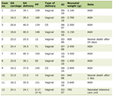 Click to view | Table 1. Posterior Spinal Fusion Pathway: Perioperative Management |
Data presentation and statistical analysis
Data were analyzed descriptively. Continuous variables are presented as median with interquartile ranges (IQRs) because of their skewed distribution, whereas categorical variables are presented as frequencies and percentages. Statistical analyses were performed using Stata version 18 (StataCorp, College Station, TX).
| Results | ▴Top |
The study cohort included 20 patients who underwent PSF and received remimazolam as part of the intraoperative anesthetic regimen and flumazenil to facilitate emergence from anesthesia and allow for postoperative neurologic examination. Baseline demographic and clinical characteristics are presented in Table 2. The median age was 14 years (IQR: 13 to 16 years; range: 11–24 years), median weight was 52.9 kg (IQR: 46.8 to 60.4 kg), and median total anesthesia time was 331 min (IQR: 315.5 to 354 min).
Click to view | Table 2. Demographic and Clinical Characteristics of Study Population |
Two patients were excluded from the flumazenil-to-tracheal extubation timing analysis because flumazenil was not administered according to the predefined peri-emergence protocol. One patient received repeated intraoperative flumazenil doses to facilitate a wake-up test following changes in neurophysiologic monitoring. This case has been previously reported as a single case report [8]. This patient was also excluded from the analysis of the interval from discontinuation of the final remimazolam infusion to flumazenil administration. The second patient received flumazenil only after tracheal extubation to improve cooperation during the postoperative neurologic examination.
Remimazolam administration and flumazenil dosing characteristics are summarized in Table 3. The median remimazolam infusion duration was 234 min (IQR: 213.5 to 258 min). The distributions of total anesthesia duration and remimazolam infusion duration are shown in Figure 1. Initial remimazolam infusion rates were ≤ 5 µg/kg/min in eight patients (40.0%), 10 µg/kg/min in 11 (55.0%), and 20 µg/kg/min in one (5.0%). Among the 19 patients included in the analysis, the median interval from final discontinuation of the remimazolam infusion to administration of the first peri-emergence flumazenil bolus was 46 min (IQR: 41 to 50 min). Flumazenil was administered in incremental boluses with a median total dose of 0.1 mg (IQR: 0.1 to 0.2 mg). Twelve patients (60.0%) received a single bolus, four patients (20.0%) received two boluses, and four patients (20.0%) received three boluses.
Click to view | Table 3. Remimazolam Infusion and Flumazenil Dosing Characteristics |
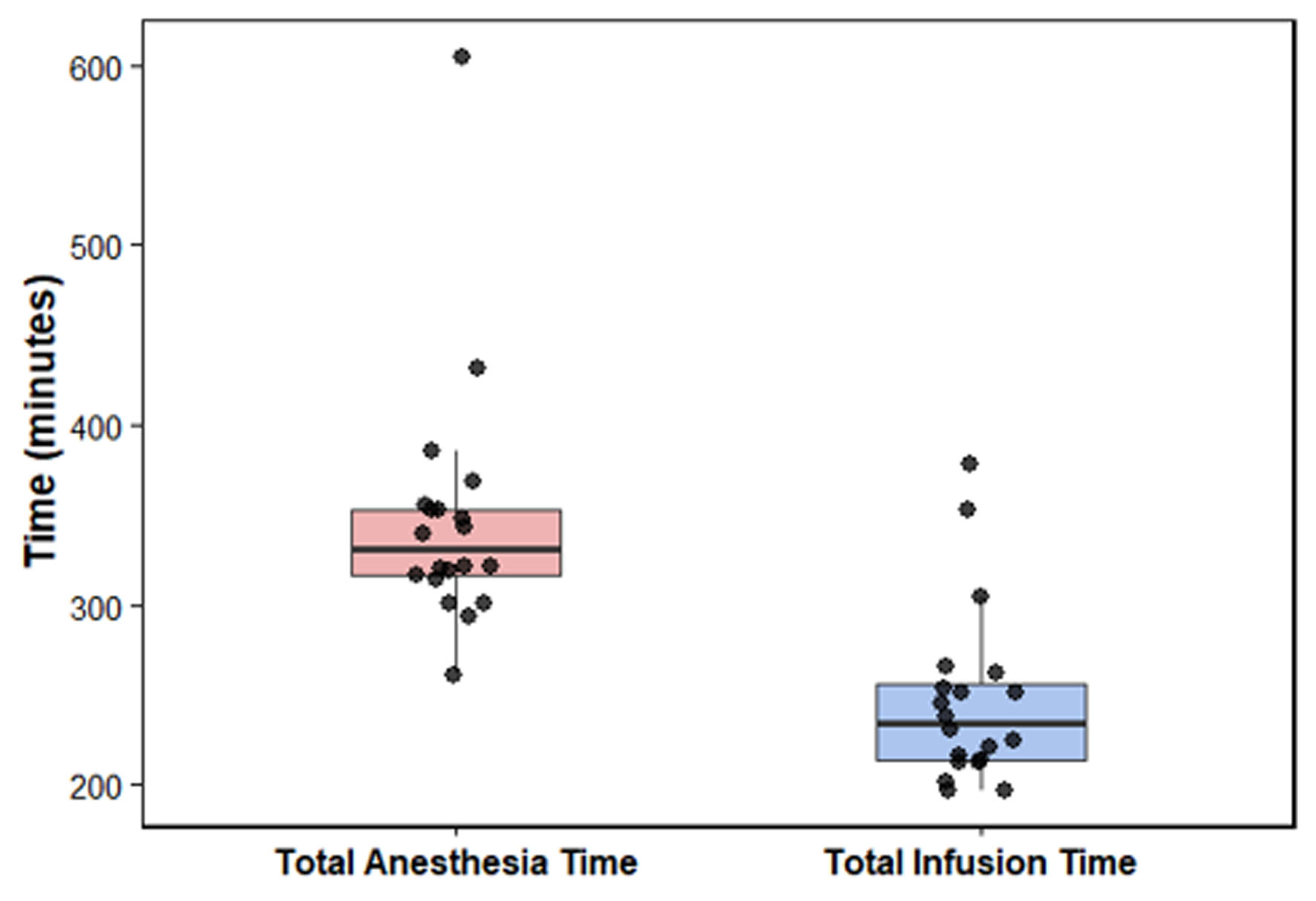 Click for large image | Figure 1. Distribution of total anesthesia duration and remimazolam infusion duration in the 20-patient study cohort. Individual points represent patients, boxes represent the interquartile ranges, and horizontal lines represent medians. |
Among the 18 patients included in the flumazenil-to-tracheal extubation timing analysis, tracheal extubation occurred within 3 min of flumazenil administration in 11 patients (61.1%), between 3 and < 5 min in five patients (27.8%), and at ≥ 5 min in two (11.1%) patients. Overall, 16 of 18 patients (88.9%) met the predefined criterion for successful reversal, defined as tracheal extubation within 5 min of flumazenil administration. Flumazenil dosing and peri-emergence effectiveness outcomes are summarized in Figure 2. No episodes of re-sedation were recorded following flumazenil administration. There were no documented cases of bradycardia, emergence agitation, or emergence delirium or other clinically significant adverse events attributable to flumazenil.
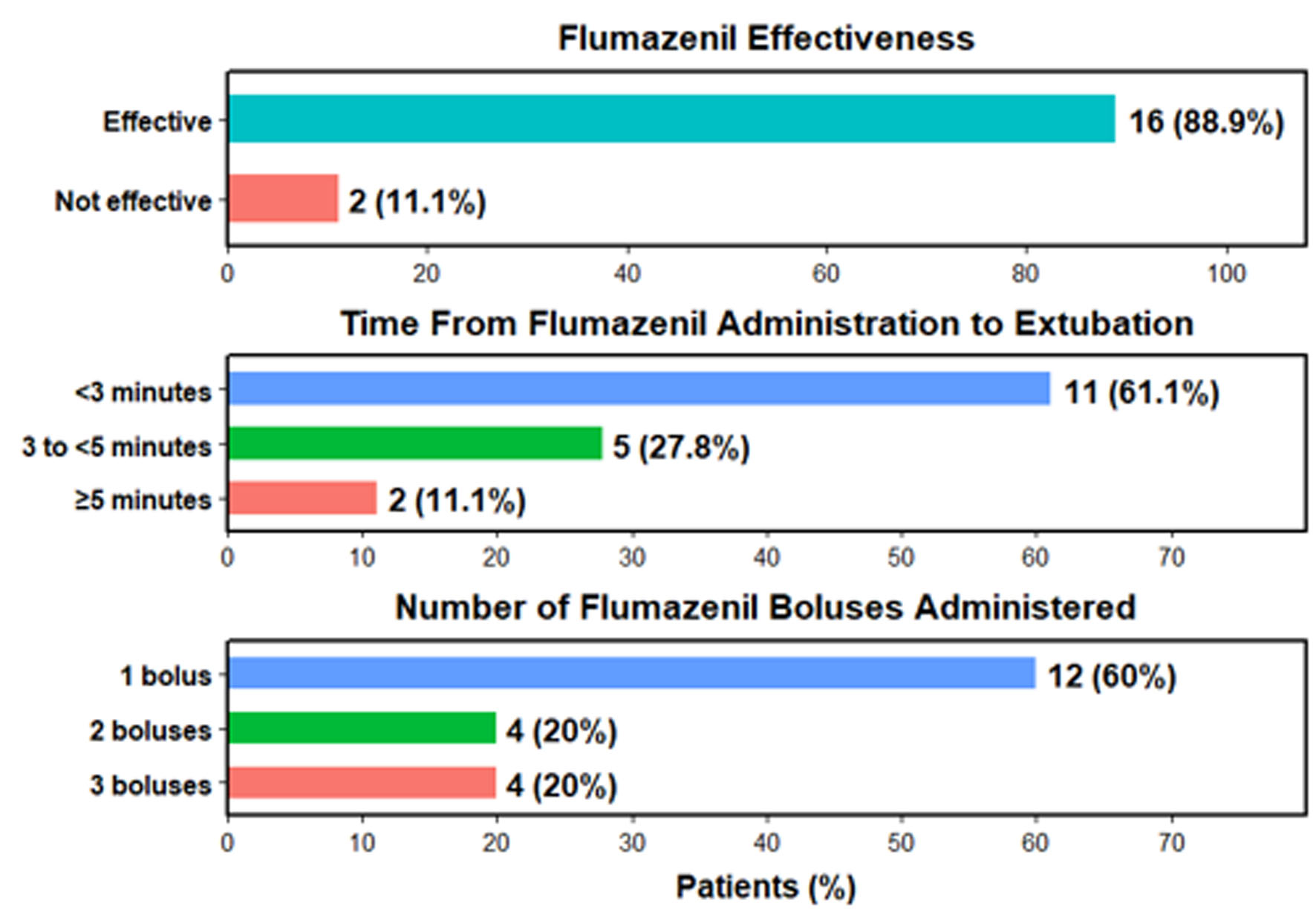 Click for large image | Figure 2. Flumazenil dosing and peri-emergence effectiveness. Clinical effectiveness was defined as tracheal extubation in less than 5 min after flumazenil administration. The effectiveness and tracheal extubation time panels include data from 18 patients. The bolus-count panel includes all 20 patients. |
| Discussion | ▴Top |
Flumazenil is a competitive benzodiazepine receptor antagonist that reverses the sedative effects of benzodiazepines at the GABAA receptor. Flumazenil received FDA approval in 1991 and is approved for the complete or partial reversal of benzodiazepine sedation after general anesthesia or procedural sedation and for selected cases of benzodiazepine overdose in adults. In pediatric patients 1 to 17 years of age, flumazenil is approved for reversal of conscious sedation induced by benzodiazepines [9]. These indications make flumazenil clinically relevant when benzodiazepine-related sedation interferes with recovery, neurologic assessment, or postoperative evaluation. Shannon et al demonstrated that flumazenil was effective in reversing the central nervous system depressant effects of midazolam in children undergoing conscious sedation, without significant adverse effects [6]. This supports its use in pediatric patients when residual sedation delays recovery or required clinical assessment. However, because recurrence of sedation can occur after initial reversal, continued observation after flumazenil administration is recommended [6, 9].
Although remimazolam is rapidly metabolized by tissue esterases and generally has a predictable recovery profile with a limited context-sensitive half-life, residual sedation may still occur after prolonged procedures with long infusion times or when it is administered with other anesthetic agents. Clinical trials, case reports, and small series have described the use of flumazenil to reverse remimazolam sedation in several perioperative settings. In pediatric-aged patients requiring general anesthesia for strabismus surgery, Qin et al compared remimazolam followed by flumazenil with propofol-based anesthesia [7]. Children in the remimazolam–flumazenil group received a flumazenil dose of 0.2–0.3 mg after surgery. Compared with the propofol group, the remimazolam–flumazenil group had shorter time to several clinical parameters including first eye opening, laryngeal mask airway (LMA) removal, and achievement of a score of 5 on the Modified Observer’s Assessment of Alertness/Sedation (MOAA/S) scale. Times were more rapid in all three categories with remimazolam–flumazenil including 74.3 ± 46.5 versus 392.1 ± 174.3 s for first eye opening, 76.8 ± 16.3 versus 395.7 ± 174.6 s for LMA removal, and 80.2 ± 46.4 versus 401.3 ± 174.4 s for an MOAA/S score of 5.
In a randomized, prospective trial in 44 adults, ≥ 75 years of age, undergoing spinal surgery, Toyota et al reported that remimazolam-based anesthesia with flumazenil reversal allowed faster emergence compared with propofol-based anesthesia [10]. Tracheal extubation time was significantly shorter in the remimazolam–flumazenil group than in the propofol group (median time of 4 versus 8 min). Time to eye opening, obeying commands, and achieving a White Fast Track score of 12 were also significantly shorter in the remimazolam–flumazenil group [10]. Anecdotally, Lee et al reported two adolescent patients in whom flumazenil was used to reverse remimazolam sedation during PSF [8]. In one patient, flumazenil was administered intraoperatively on two separate occasions to facilitate an intraoperative wake-up test when there were changes in neurophysiologic monitoring while in the other patient, flumazenil was administered at the completion of the case to speed emergence. In both cases, flumazenil was anecdotally associated with a more rapid emergence for anesthesia.
Similar success has been noted in the adult population in various clinical scenarios to speed emergence. Given its pharmacokinetic profile, remimazolam has become more frequently used as part of the anesthetic technique for awake craniotomy [11]. In a prospective, randomized trial, 58 adult patients presenting for elective awake craniotomy were randomized to receive remimazolam and reversal with flumazenil or propofol [12]. The primary end point was emergence time following the procedure. Patients in the remimazolam–flumazenil group had a faster mean arousal time (890.8 ± 239.8 versus 1,075.4 ± 317.5 s; P = 0.013) and higher and more reliable intraoperative task performance (numerical rating score (NRS) 8.81 ± 1.50 versus 7.69 ± 2.36; P = 0.043). There were no significant perioperative complications.
In adult outpatients with mental disabilities undergoing dental treatment, Jeon et al compared propofol anesthesia with a propofol–remimazolam technique for TIVA [13]. General anesthesia was induced with target-controlled propofol and remifentanil followed by rocuronium for neuromuscular blockade. In the intervention group, propofol was replaced with remimazolam (infusion rate of 1–2 mg/kg/h) approximately 1 h before the end of surgery, followed by flumazenil (0.5 mg) after reversal of neuromuscular blockade. Compared with continued propofol anesthesia, the propofol–remimazolam technique shortened the post-anesthesia care unit (PACU) stay by 8.7 min, time-to-eye opening by 5.4 min, and time to tracheal extubation by 5.5 min [13].
In addition to these individual reports, Wu et al performed a systematic review and meta-analysis of randomized controlled trials in 745 adults comparing remimazolam–flumazenil with propofol [14]. Across the analysis of the combined study populations, remimazolam–flumazenil was associated with a 4.34-min reduction in emergence time, a 4.26-min reduction in tracheal extubation or airway-device removal time, and a 4.42-min reduction in PACU stay compared with propofol. However, re-sedation occurred more frequently in the remimazolam–flumazenil group than in the propofol group (9.03% versus 1.38%, respectively). The authors rated the certainty of evidence for the recovery-time outcomes as low and the evidence regarding re-sedation as moderate. Together, these studies suggest the potential usefulness of remimazolam–flumazenil when a faster emergence is desired, while also emphasizing the need for continued monitoring for re-sedation.
The current study adds to this limited literature by describing the use of flumazenil after remimazolam as part of our TIVA regimen for PSF in adolescents and young adults. The clinical setting is important because timely postoperative neurologic examination is needed to assess motor and sensory function following spinal instrumentation. Delayed emergence may complicate early neurologic assessment and make it more difficult to distinguish residual anesthetic effects from a potential neurologic deficit. In this cohort, remimazolam was administered as an adjunct to general anesthesia according to the departmental PSF pathway. At completion of the surgical procedure, flumazenil was administered in incremental doses to facilitate emergence and allow postoperative neurologic examination. Our retrospective and anecdotal experience suggests that flumazenil may facilitate emergence following TIVA with remimazolam/propofol/remifentanil in patients undergoing PSF. After excluding two patients whose flumazenil administration did not meet the predefined peri-emergence timing parameters, 18 patients were included in the flumazenil-to-tracheal extubation analysis. This focused the analysis on patients who received flumazenil at the completion of the procedure to facilitate emergence and tracheal extubation. Among the 19 patients included in the remimazolam-to-flumazenil interval analysis, the first peri-emergence flumazenil bolus was administered a median of 46 min after discontinuation of the final remimazolam infusion. This finding provides additional context for the reversal strategy, as flumazenil was administered despite the interval between remimazolam discontinuation and planned emergence. Because patients received other anesthetic agents and the study lacked a comparison group, the observed recovery pattern cannot be attributed to residual remimazolam or flumazenil alone. Using tracheal extubation in less than 5 min as the marker of clinical effectiveness, 16 of 18 patients, or 88.9% of the cohort, met this outcome. These findings suggest that small, titrated doses of flumazenil may be useful for reversing residual remimazolam-related sedation when rapid emergence and early postoperative neurologic examination are desired.
Adverse effects of flumazenil should be considered when flumazenil is used as a reversal agent. Potential adverse events include nausea, vomiting, agitation, anxiety, hemodynamic changes, re-sedation, and seizures. In a systematic review and meta-analysis of flumazenil use for suspected benzodiazepine intoxication, Penninga et al reported that agitation was the most common adverse event, while serious adverse events included supraventricular arrhythmias and convulsions [15]. Although these data come primarily from overdose settings rather than controlled perioperative use, they highlight the importance of monitoring for neurologic and hemodynamic events after flumazenil administration. Seizure risk is most relevant in patients with chronic benzodiazepine exposure, benzodiazepine dependence, seizure disorders, or mixed overdoses involving proconvulsant medications [9, 15]. Although these risks may be less common in the controlled perioperative setting, they remain important considerations when selecting patients for flumazenil administration. The safety findings in our study cohort were reassuring when flumazenil was used in this clinical context. No episodes of re-sedation were recorded, and there were no documented cases of bradycardia, emergence agitation, or emergence delirium. Overall, no clinically significant adverse events were documented as directly related to flumazenil administration.
However, re-sedation remains an important concern when flumazenil is administered to reverse the effects of benzodiazepines. The duration of flumazenil may be shorter than the duration of the residual benzodiazepine effect, and pediatric labeling notes that recurrence of sedation may occur. This concern has also been described after remimazolam anesthesia. Lee et al reported atypical re-sedation after general anesthesia using remimazolam despite initial recovery after flumazenil [16]. Masui also discussed that the clinical effects of remimazolam can reappear after flumazenil, especially if the effect of flumazenil resolves while residual remimazolam effect is still present [17]. Therefore, continued monitoring of the patient’s clinical status is suggested after flumazenil administration. Although our patients were admitted to the inpatient orthopedic ward, because the patients received patient-controlled analgesia, institutional practice included continuous pulse oximetry and frequent vital-sign monitoring.
Specific limitations of the current study should be recognized. Its retrospective, single-center design, small sample size, and absence of a comparison group limit the generalizability of the findings and prevent determination of a definitive causal relationship between flumazenil administration and rapid tracheal extubation. A somewhat arbitrary timeframe of less than 5 min was used to judge clinical efficacy of flumazenil when reversing residual sedation from remimazolam. The presumed clinical efficacy would decrease if this interval were to be shortened. Medication timing and doses including intraoperative use of opioids, emergence characteristics, postoperative neurologic examinations, and adverse events were obtained from EMR documentation and may not have been recorded uniformly. Consequently, the documented interval between remimazolam discontinuation and flumazenil administration may not precisely reflect the timing of bedside events. As a retrospective study, the exact timing of the administration of flumazenil, its dose, and use of subsequent doses was not controlled, but rather left to the clinical discretion of the anesthesia team. Concurrent anesthetic and analgesic agents, including propofol, remifentanil, methadone, and fentanyl (Table 4), as well as differences in anesthetic duration, patient comorbidities, and surgical factors, may also have influenced emergence. Therefore, the observed recovery pattern cannot be attributed solely to residual remimazolam or its reversal with flumazenil. Prospective studies using standardized dosing protocols, objective recovery measures, and an appropriate comparison group are needed to better define the efficacy and safety of this approach.
Click to view | Table 4. Additional Intraoperative Medicationsa |
Acknowledgments
None to declare.
Financial Disclosure
None to declare.
Conflict of Interest
None to declare.
Informed Consent
As a retrospective study using de-identified data, the need for individual written informed consent was waived.
Author Contributions
Chart reviews, data collection, and preparation of initial, subsequent, and final drafts: NW; participation in preparation of initial, subsequent, and final drafts, statistical analysis, and data preparation: SAYK; direct patient care, writing, and review of all drafts: JDT.
Data Availability
Any inquiries regarding supporting data availability of this study should be directed to the corresponding author.
| References | ▴Top |
- Tobias JD. Clinical experience with remimazolam in pediatric anesthesiology: An educational focused review. Paediatr Anaesth. 2024;34(11):1095-1106.
doi pubmed - Gao YQ, Ihmsen H, Hu ZY, Sun W, Fang YB, Wang Z, Schuttler J, et al. Pharmacokinetics of remimazolam after intravenous infusion in anaesthetised children. Br J Anaesth. 2023;131(5):914-920.
doi pubmed - Zhang Y, Chen Q, Wang L, Zeng Q, Cui H, Guo S, Xiang F, et al. Remimazolam in pediatric anesthesia: a systematic review for clinical decision-making. Front Pediatr. 2025;13:1662752.
doi pubmed - Kimoto Y, Hirano T, Kuratani N, Cavanaugh D, Mason KP. Remimazolam as an adjunct to general anesthesia in children: adverse events and outcomes in a large cohort of 418 cases. J Clin Med. 2023;12(12):3930.
doi pubmed - Hughes M, Cornelius S, Kadado A, Chambers R, Hall B, Tobias JD. Remimazolam as an adjunct to general anesthesia during spine surgery in adolescents. J Curr Surg. 2023;13:1-5.
- Shannon M, Albers G, Burkhart K, Liebelt E, Kelley M, McCubbin MM, Hoffman J, et al. Safety and efficacy of flumazenil in the reversal of benzodiazepine-induced conscious sedation. The Flumazenil Pediatric Study Group. J Pediatr. 1997;131(4):582-586.
doi pubmed - Qin J, Gan W, Liu Q, Zhang X, Li X, Lu B, Shen Q. Emergence profiles of remimazolam-flumazenil versus propofol in pediatric general anesthesia for strabismus correction: a randomized clinical trial. BMC Anesthesiol. 2025;25(1):218.
doi pubmed - Lee N, Moon K, Uffman JC, Tobias JD. Flumazenil reversal of remimazolam sedation during posterior spinal fusion in two adolescents. J Med Cases. 2026;17(1):32-36.
doi pubmed - ROMAZICON® (flumazenil) injection [prescribing information]. South San Francisco, CA: Genentech, Inc.; 2007.
- Toyota Y, Kondo T, Oshita K, Haraki T, Narasaki S, Kido K, Kamiya S, et al. Remimazolam-based anesthesia with flumazenil allows faster emergence than propofol-based anesthesia in older patients undergoing spinal surgery: A randomized controlled trial. Medicine (Baltimore). 2023;102(46):e36081.
doi pubmed - Sato T, Nishiwaki K. Comparison of remimazolam and propofol in anesthetic management for awake craniotomy: a retrospective study. J Anesth. 2022;36(1):152-155.
doi pubmed - Sato T, Ando T, Ozeki K, Asano I, Kuwatsuka Y, Ando M, Motomura K, et al. Prospective randomized controlled trial comparing anesthetic management with remimazolam besylate and flumazenil versus propofol during awake craniotomy following an asleep-awake-asleep method. J Neurosurg Anesthesiol. 2025;37(1):40-46.
doi pubmed - Jeon S, Kim J, Karm MH, Kim JT. Effect of converting from propofol to remimazolam with flumazenil reversal on recovery from anesthesia in outpatients with mental disabilities: a randomized controlled trial. BMC Anesthesiol. 2024;24(1):151.
doi pubmed - Wu Q, Xu F, Wang J, Jiang M. Comparison of remimazolam-flumazenil versus propofol for recovery from general anesthesia: a systematic review and meta-analysis. J Clin Med. 2023;12(23):7316.
doi pubmed - Penninga EI, Graudal N, Ladekarl MB, Jurgens G. Adverse events associated with flumazenil treatment for the management of suspected benzodiazepine intoxication—a systematic review with meta-analyses of randomised trials. Basic Clin Pharmacol Toxicol. 2016;118(1):37-44.
doi pubmed - Lee SJ, Jung I, Park S, Ki S. Case report of atypical re-sedation after general anesthesia using remimazolam. Anesth Pain Med (Seoul). 2024;19(4):320-325.
doi pubmed - Masui K. Caution!! Reappearance of remimazolam effect after a flumazenil bolus: a larger bolus of flumazenil and a lower total remimazolam clearance are higher risks. J Anesth. 2023;37(1):1-5.
doi pubmed
This article is distributed under the terms of the Creative Commons Attribution 4.0 International License (CC BY 4.0), which permits unrestricted use, distribution, and reproduction in any medium, including commercial use, provided the original work is properly cited.
Journal of Current Pharmacology is published by Elmer Press Inc.