

Beyond the Procedure Day: Chronic Gastrointestinal and Nutritional Sequelae of Sustained Glucagon-Like Peptide-1 Receptor Agonist Therapy: Implications for the Internist
DOI:
https://doi.org/10.14740/jcp5Keywords:
Glucagon-like peptide-1 receptor agonists, Gastrointestinal motility, Gastroparesis, Sarcopenia, Malnutrition, DeprescribingAbstract
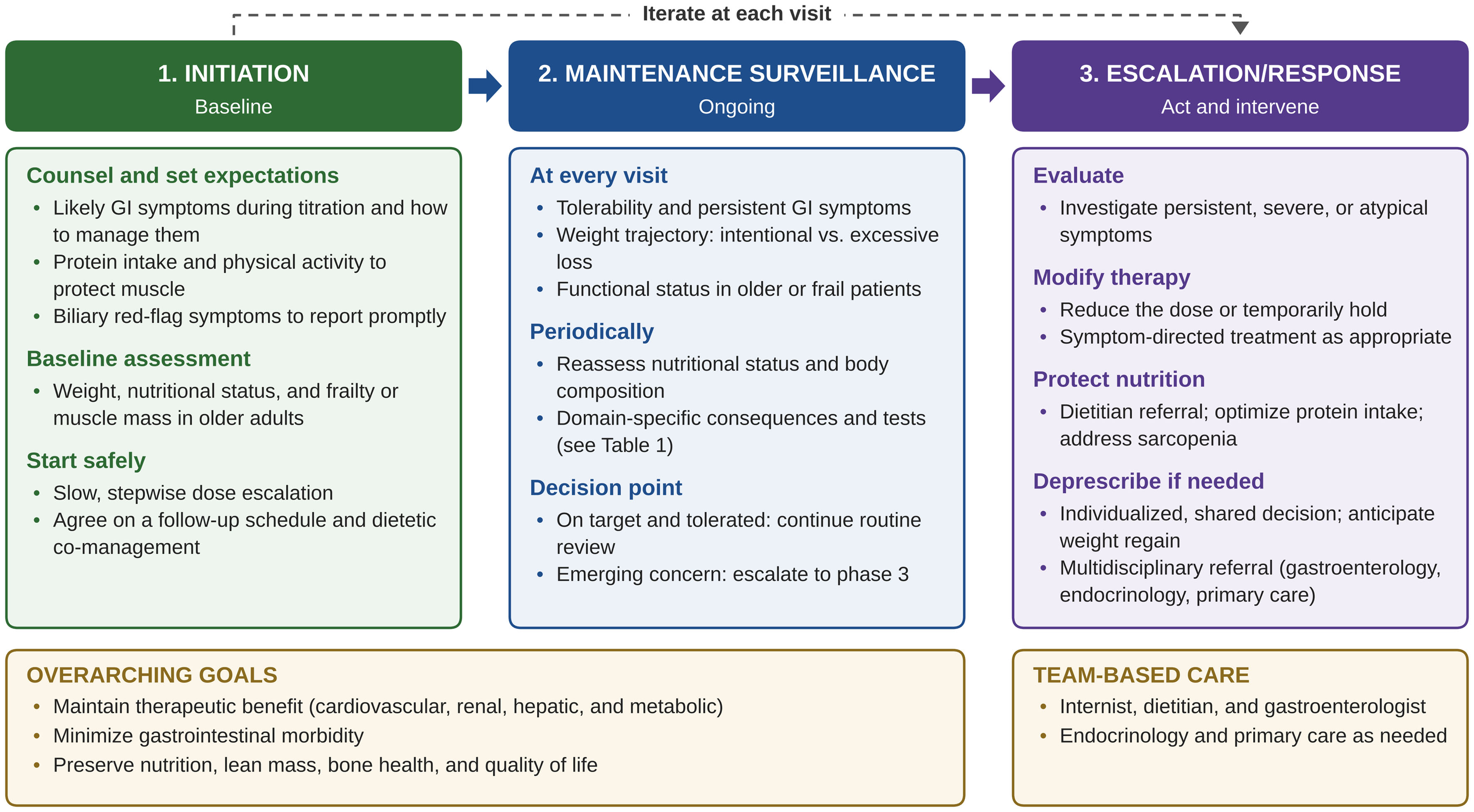
Glucagon-like peptide-1 receptor agonists (GLP-1 RAs) and dual incretin agonists have rapidly evolved from glycemic adjuncts to indefinitely prescribed therapies for obesity and for reducing cardiovascular, renal, and hepatic risks. Existing safety literature has focused predominantly on the acute, periprocedural issue of delayed gastric emptying and pulmonary aspiration during endoscopy and anesthesia. Much less attention has been paid to the gastrointestinal and nutritional implications of remaining on these agents for years, the clinical situation that the general internist increasingly manages. This narrative review, based on a structured literature search, consolidates recent evidence on the chronic gastrointestinal and nutritional effects of sustained GLP-1 RA exposure. It describes how persistent incretin signaling may change gastric emptying, gut motility, appetite, and biliary dynamics, and differentiates modulatory effects that gradually dissipate from those that persist. It examines the burden of chronic nausea and the disputed nature of GLP-1-associated gastroparesis; altered absorption of concomitant oral drugs; the nutritional and body-composition implications of sustained caloric restriction (e.g., protein-energy inadequacy, micronutrient deficiency, and accelerated loss of lean mass and bone); and the hepatobiliary and pancreatic consequences associated with rapid and sustained weight reduction. Particular attention is given to older, frail, and multimorbid patients, for whom sarcopenia and undernutrition carry disproportionate risk. Finally, a pragmatic surveillance and management framework is proposed, covering monitoring intervals, nutritional co-management, medication review, and dose adjustment or deprescribing. With lifelong use of these treatments, anticipatory gastrointestinal and nutritional care is needed for their safe use.
Published
Issue
Section
License
Copyright (c) 2026 The authors

This work is licensed under a Creative Commons Attribution-NonCommercial 4.0 International License.